This paper is organized from the "Guanzhi Lecture Hall" founded by the Shanghai Library Historical Documentation Center, and Chen Xianxing, a senior researcher at the Shanghai Library Historical Documentation Center, explains rare ancient books.
Chen Xianxing was born in Shanghai in December 1951, and his ancestral home is Lishui, Jiangsu. In 1973, he joined the Shanghai Library, studied editions and epigraphy from Gu Tinglong and Pan Jingzheng, and was in charge of cataloging and edition identification of ancient books for a long time. He has been a visiting scholar at the University of California, Berkeley, and the China Literature Research Archive, and has compiled (including cooperating with others) a school-based catalogue of’s ancient manuscripts, a rare book of ancient books, a journal of Chinese ancient books in the East Asian Library of the University of California, Berkeley, a school-based appraisal of Ming and Qing manuscripts, a catalogue of Song manuscripts collected in Shanghai Library, an inscription and postscript of rare books in Shanghai Library and a rare book in Shanghai Library. He is currently a member of the National Cultural Relics Appraisal Committee, a librarian of Shanghai Literature and History Research Institute and a research librarian of Shanghai Library.
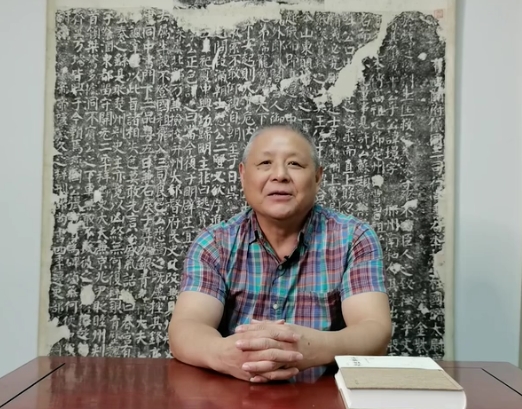
Chen Xianxing, Senior Research Fellow, Shanghai Library Historical Documentation Center
The Discovery and Identification of the Northern Song Dynasty’s Version of Shi’s Six Sticks and Hangzhou West Lake Zhaoqing Temple Jielian Society Collection
Today, there are about 3,000 surviving Song editions, except Buddhist scriptures, there are less than 20 in the Northern Song Dynasty, and its value is self-evident. Because of the scarcity, there was a lack of research on the engraving of the Northern Song Dynasty in the past, or the Southern Song Dynasty was regarded as the Northern Song Dynasty, and some people regarded the Northern Song Dynasty as the Southern Song Dynasty. It is not difficult for us to correct the former mistake now. For example, Du Xunhe’s Collected Works, a Southern Song Dynasty Shu edition, and Selected Poems of Wang Jinggong and Tang Hundred Schools, which were collected in the above picture, were all classified as Northern Song editions in the old days, but later changed to Southern Song editions with the improvement of people’s understanding. It is more difficult to correct the mistake of regarding the Northern Song Dynasty as the Southern Song Dynasty. This is not only the difficulty of identification, but also because people learned from the past and were skeptical or even contradictory from the beginning. For example, the Long and Short Classics in Weng’s collection has always been regarded as the Southern Song Dynasty edition, especially after being appraised by the officials of Siku Library, later generations habitually searched for the evidence printed in the Southern Song Dynasty along their thinking, but ignored many obvious features printed in the Northern Song Dynasty. Therefore, I said that the above picture is worth spending 4.5 million US dollars to buy a "Long Short Classic", and many other rare books are "given away" by Mr. Weng Wange. From this point of view, we should regard the identification and research of the Northern Song Dynasty edition as one of the important tasks of the development of edition science today, and it is not an exaggeration to call it filling the gap of predecessors.
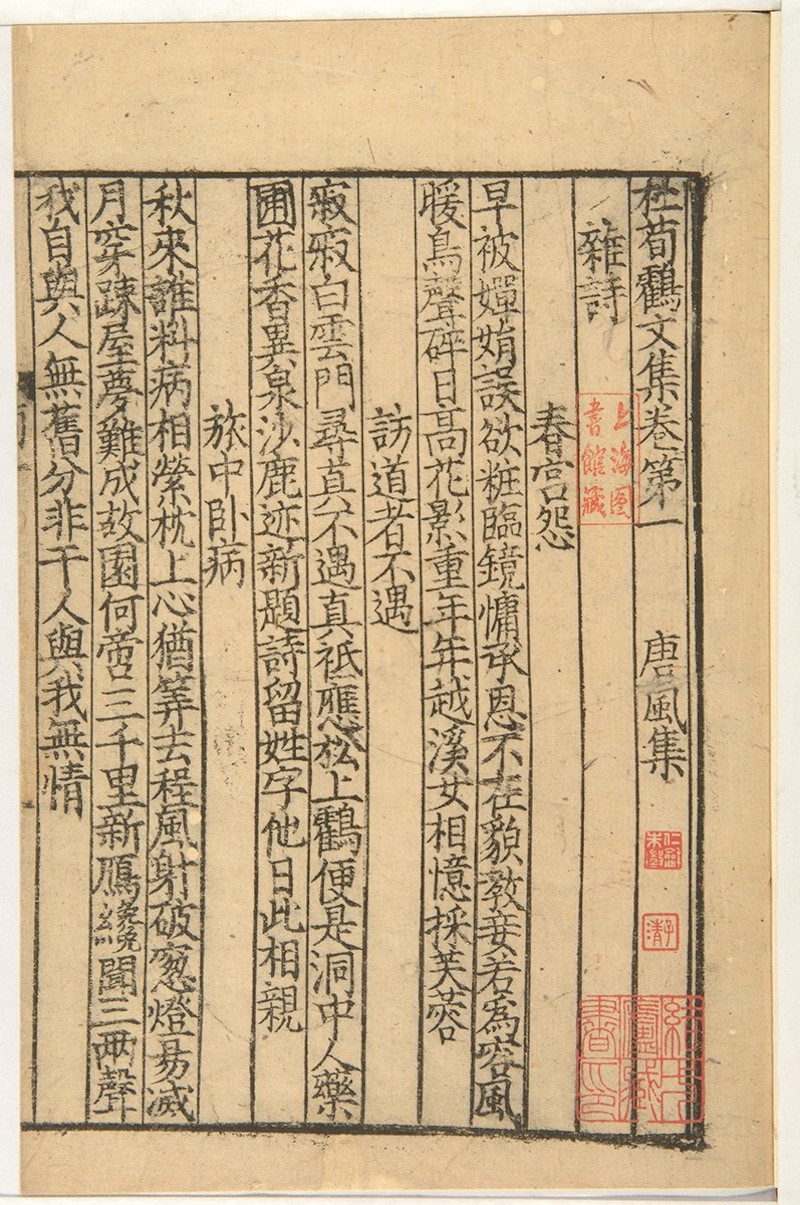
Du Xunhe’s Collected Works, a South Song Shu Engraving Edition, Collected in Shanghai Library.
I’m here to introduce two books of the Northern Song Dynasty, one of which is Shi’s Six Posts, which is hidden in Tofuku-ji Temple, Kyoto. The other is "The Lotus Collection of Zhaoqing Temple in West Lake, Hangzhou", which was auctioned by Beijing Zhuode Auction Company in autumn in 2015 and finally received by the owner of Shanghai Fengjiang Bookstore.
Six Chapters of Shi’s is a Buddhist book imitating the style of Six Chapters of Bai’s, and its editor is Yi Chu, a high-ranking monk in Kaiyuan Temple of Qizhou in the later Zhou Dynasty. There are twelve volumes in the book. In 2001, this book was photocopied and published by Linchuan Bookstore, Japan, as one of the Series of Zen Classics compiled by two Japanese scholars, Saiyama Yanata and Hiroshi shiina, with the title "Six Chapters of Yi Chu", which was designated as a block-printed edition in the Southern Song Dynasty. In 2008, Chen Jie, now a professor at the University of Tokyo in Japan, came to the picture to read a book. I happened to see that she was carrying some copies of this book, and the engraving font was long and narrow European characters. I immediately said to her, "This is probably the Northern Song Dynasty edition, and its font is very similar to many European Northern Song Dynasty editions, including Long and Short Classics. If you have the opportunity to go to Japan, you must read the original book." In the winter of 2009, I got the opportunity to visit Japan for three months, thinking that I could see books there, but it was not. Because this book has always been hidden, few Japanese experts and scholars have read it. It is said that even Mr. shiina Hongxiong, who wrote the publication instructions of the photocopy, only saw the film. Therefore, after I arrived in Japan, I could only "have an eye addiction" with photocopies. Unexpectedly, I looked through it and found something.
This book is divided into volumes by strategy (that is, volume). The first three volumes are slightly rough in engraving, and the shape is uncertain. The number of volumes or the title "Volume" engraved in the center of the edition, or the title "Strategy", or in Yin or Yang, with fish tail and black mouth; From the fourth volume to the twelfth volume, the core of the edition is only a few questions, no fish tail, basically white mouth, and the shape is unified. At the end of the volume, in the second year of Chongning in the Northern Song Dynasty (1103), a monk in Kaiyuan Temple in Yuezhou carved a book with an inscription and postscript. This book was first proofread and engraved with four strategies, but it was not completed because of lack of funds, and it was only through various ways that it was able to continue to engrave. Although it is slightly different from the engraving, it is generally consistent (later, volumes 5 to 12 were engraved and published according to the layout of volume 4); Besides, the words Xuan, Lang, Jing, Hong, Yin, Kuang, Zhen, etc. are not strictly taboo, but they are all taboo in the temples of the Southern Song Dynasty, so the postscript of Lu Tan was not later reprinted, so it should be no problem to make this book a biennial publication of Chongning in the Northern Song Dynasty. However, this is not the first printed edition of Chongning. Depending on whether the book edition has been altered, rambled, revised or engraved, it is likely that the printing will be as late as the Southern Song Dynasty.
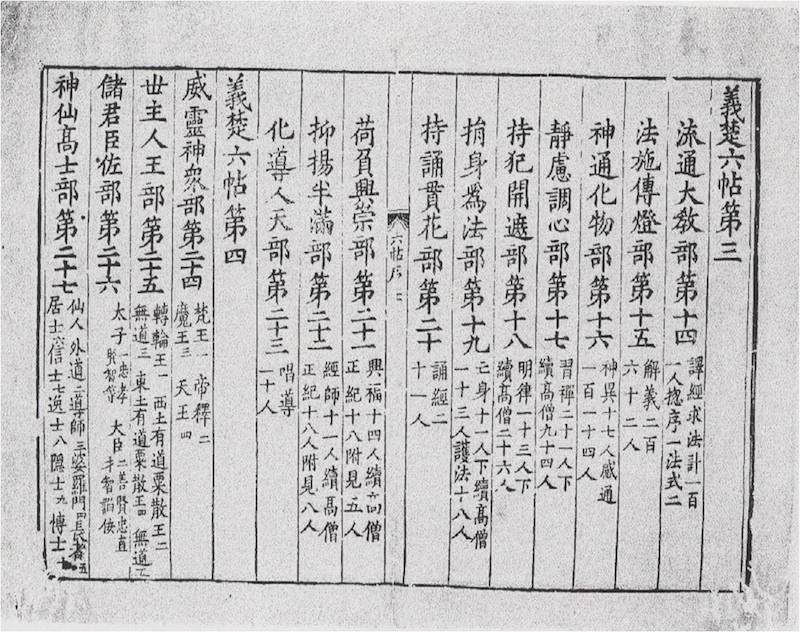
Photocopy of Shi’s Six Sticks (the title was changed to "Six Sticks of Yi and Chu")
In the past, Japanese academic circles have always called this book Six Chapters of Yi Chu, not because of the common name of the author, but because the book is clearly titled "Six Chapters of Yi Chu" at the beginning and end of the volume. However, after careful examination, I found that the word "Yi Chu" in each volume has been gouged out, not only leaving traces of gouging out, but also the word "Yi Chu" is a Liu Ti word, which is quite different from the word "Liu Tie" and the European word in the text. At the beginning of this book is Yi Chu’s Six Postscripts of Shi, and at the end is Yi Chu’s Preface to Six Postscripts of Shi, Hu Zheng’s Preface to Six Postscripts of Shi, and Lu Zhong’s Preface to Reopen Six Postscripts of Shi, so the word "be gouged out" should be "Shi", and the original title is actually "Six Postscripts of Shi".
In addition, Japanese scholars did not seem to pay attention to the repair of this book before. Judging from the photocopies, at least one feature is very obvious, that is, all the repaired editions are mostly Liu Ti characters, which are similar to the font of "Yi Chu" which was gouged out at the end of the volume. Related to this, most of the pages of this book have no engraved names, and some of them have only single words, and Zhu Jian is the only one with full names. Although they have not been found in other editions, it is difficult to check them, but they also have a feature, that is, all the engraved leaves are later supplemented. Therefore, even if Zhu Jian and other engravers can find out, they can only confirm the age of the repaired version, not the original engraving age. From the font, they are probably engravers in the Southern Song Dynasty.
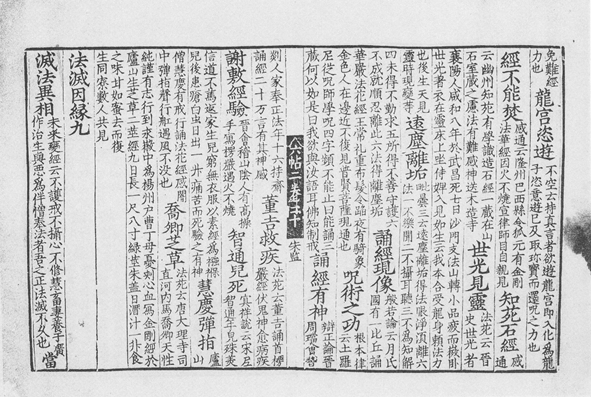
Zhu Jian, the engraver on the photocopy of Shi’s Six Posts
With the help of Chen Jie and Mr. Naipujin of Kyoto University, I was lucky enough to visit Tofuku-ji Temple twice on December 19th, 2009 and March 4th, 2013. For the first time, I was only allowed to read for two hours, that is, from 9: 30 to 11: 30 in the morning, and I only read four volumes, that is, one third of the whole book. But before I left, I told the other party with certainty that this book should have been published in the Northern Song Dynasty. After listening to it, the other party’s eyes lit up and promised to let me read the whole book in the future. Soon, the famous Japanese version scientist Yasuo Ozaki heard Chen Jie say that I decided that the book was a book of the Northern Song Dynasty, and thought that I was overrated. So four years later, I invited Mr. Ozaki to go with me and read it all day. If the first reading of the original is only a rough proof of the previous reading of the photocopy, then after nearly four years, we will have a new understanding. The repaired version of this book has different faces, even if there are engravers, there are similarities and differences. For example, the heart of the sixty-first leaf of Volume 6 has the word "benevolence", and its frame is obviously smaller than the original one, and it is unilateral all around, which is different from that of the original one. However, the frame of the leaf engraved with Zhu Jian is the same as the original one. There are also advantages and disadvantages in the writing and engraving of the patch, such as the eighth and eleventh leaves of volume five, which may be ignored if not carefully identified; The inferior is like the twenty-first leaf of Volume 9. If you don’t know the background of this book, it seems that there is no doubt that it is a supplement to the Ming Dynasty based on experience. These phenomena not only infer that this edition may be mended more than once, but also remind me whether there will be any identification problems in some surviving Song Dynasty engraved Yuan editions or Song Dynasty engraved Yuan Ming handed-over editions, because some repaired editions,There is no clear evidence like the three dynasties edition of imperial academy in Nanjing in Ming Dynasty, but the predecessors made a judgment that the edition was revised in Yuan Dynasty or revised in Yuan Dynasty and Ming Dynasty because of its different fonts and the repaired edition was often worse than the original one. Is this judgment based on limited experience correct? In other words, should these books be re-appraised? Because this book, together with a batch of other Chinese books collected by Tofuku-ji Temple, was brought to Japan from China by the Japanese monk Bian Yuan in the first year of Chunyou in the Southern Song Dynasty (1241) and was hidden in Fumonin, Tofuku-ji Temple, and its revised edition was even worse before Chunyou’s first year.
Next, I will talk about another Northern Song Dynasty edition, Lotus Society Collection of Zhaoqing Temple in West Lake, Hangzhou. Before 2009, I haven’t seen the Song engraving of the authentic Yan book "Magu Xiantan Ji" and the Liu book "Mysterious Pagoda". Since I visited Japan in November, 2009, I have successively seen the Song version of the exquisite small-print edition "Four-part law to delete complex and fill gaps and act as banknotes" (Shaoxing three-year Zhejiang Siming engraving) and the large-print edition "King Kong Prajna Paramita Sutra" (the date and place of engraving are unknown). I didn’t know that what I saw before included the Northern Song Dynasty’s "Opening the Treasure" and the Southern Song Dynasty’s large-print edition "A Collection of Spring and Autumn Classics" At the same time, I also learned that in the Song Dynasty, Zhejiang carved books, not all European characters were used. Therefore, at the end of 2014, when Xiling auction house collected the Zhejiang edition of The Lotus Sutra, I thought it was entirely possible to engrave the magazine in the late Northern Song Dynasty, based on its exquisite font and other relevant basis.
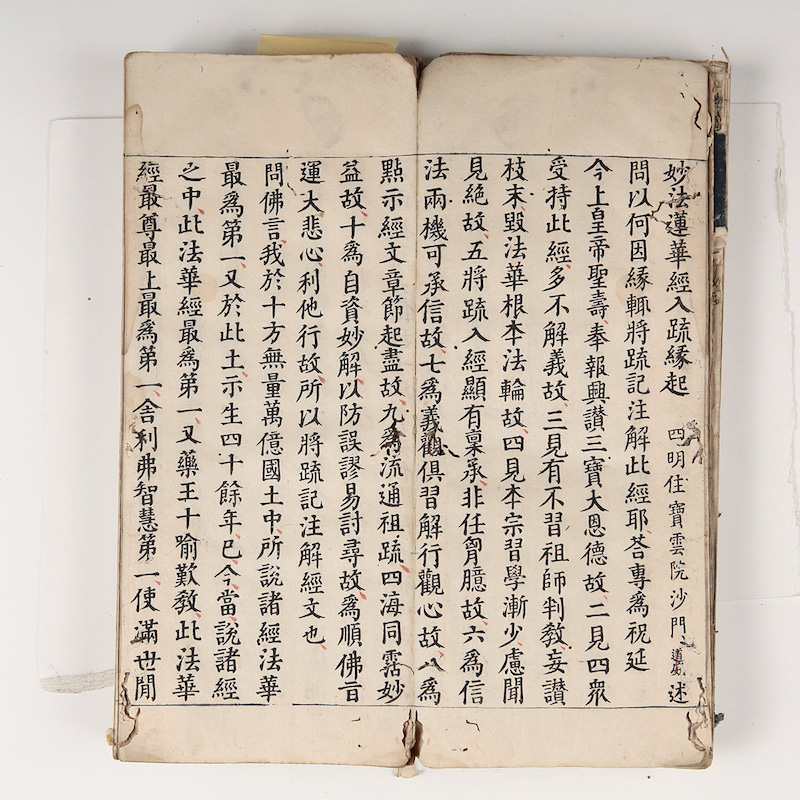
Book Shadow of Hangzhou Engraving Lotus Sutra at the End of Northern Song Dynasty
Before that, as early as 2000, when the Shanghai Library purchased Weng’s collection, I had noticed that there were differences between the European-style version of the Northern Song Dynasty and the European-style version of the Southern Song Dynasty because of studying the engraving of the Long and Short Classics. In Japan, I have read the Classic of Filial Piety and General Canon collected by the Imperial Palace’s Shuling Department, the Collection of Historical Records collected by Osaka Xingyu Bookstore, the Six Postscripts of Shi’s in Tofuku-ji Temple, Kyoto, the Lunlue of the Ritual Department collected by Nagoya Zhenfu Temple, and the Family Name Interpretation collected by the Library of Congress, and learned that the European characters in the Northern Song Dynasty are mostly narrow and long. In that case, the so-called "square font" of Zhejiang block-printed edition by the previous edition scholars can only be said to conform to the general appearance of Zhejiang block-printed edition in the Southern Song Dynasty, but not in the Northern Song Dynasty.
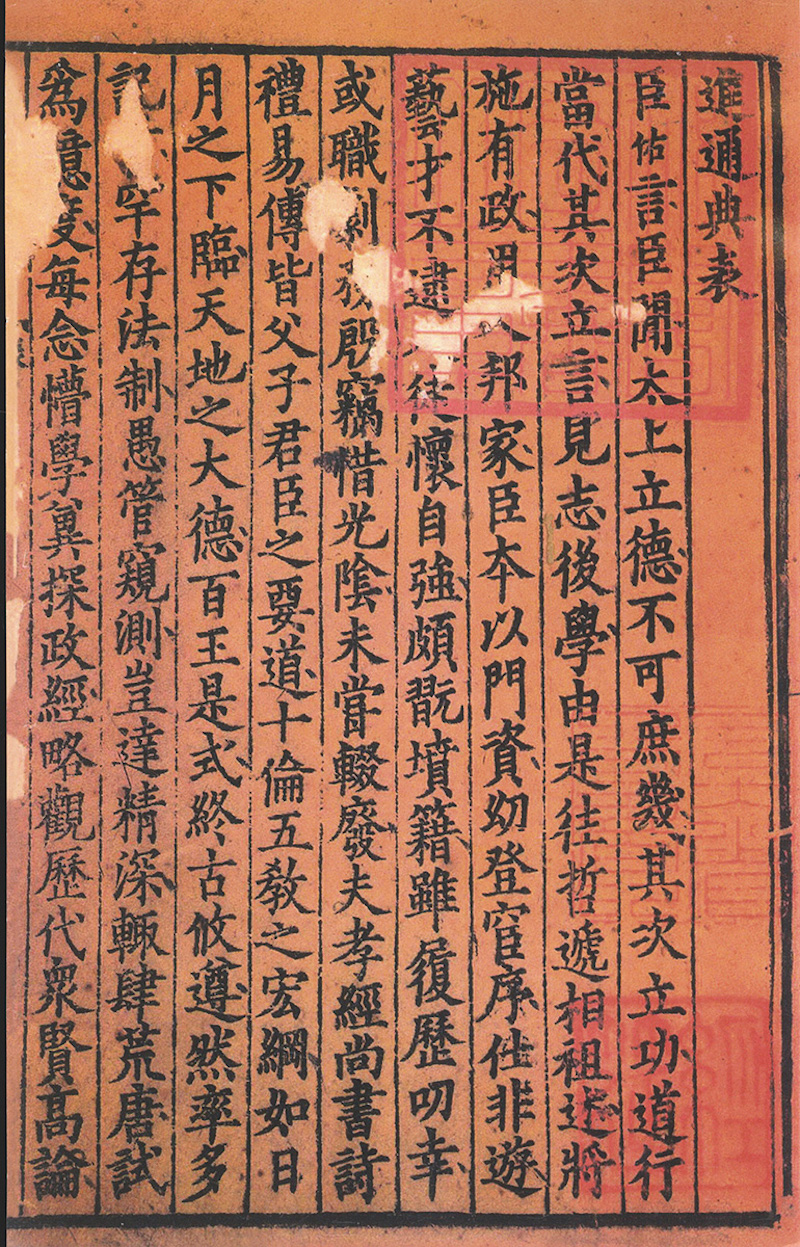
The Book Shadow of Tongdian in the Northern Song Dynasty Collected by the Book Mausoleum Department of the Imperial Palace in Japan
After realizing that the European style and Yan style engravings in the Northern Song Dynasty and some early Southern Song Dynasty are different from the common Southern Song Dynasty engravings, there is an intuition that there should also be authentic Liu Ti characters in the Northern Song Dynasty in history. And this book "Hangzhou West Lake Zhaoqing Temple Jielian Society Collection", which was compiled and engraved by people from Zhaoqing Temple Province, and the preface to the book "Qian Tang West Lake Zhaoqing Temple Jiejing Society Collection" written by Dr. Tai Chang in the second year of Dazhong Xiangfu (1009) is the authentic font of Liu Gongquan’s book "Mysterious Pagoda", and the rest of the contents, preface, inscription and text are "Magu Xiantan Ji". Compared with Qian Yi’s preface font, the common Liu Ti characters popular in Fujian woodcut in the Southern Song Dynasty are quite different.
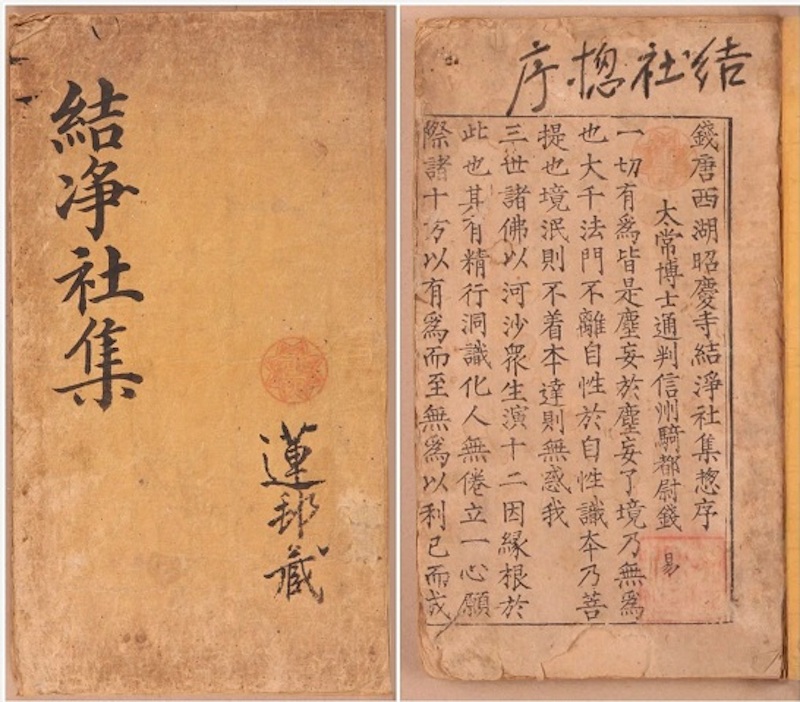
Book shadow of the preface to the collection of Jiejing Society of Zhaoqing Temple in West Lake of Qian Tang Dynasty
Judging from the text, the poems of 90 people who entered the Lotus Society of Zhaoqing Temple in West Lake in this book were all written between the first year of Chunhua in the Northern Song Dynasty (990) and the third year of Jingdezhen (1006). Su Yijian’s preface was written in the second year of Chunhua (991), Song Baizhi’s association inscription was written in the first year of Chunhua, Ding Wei Song dynasty’s preface was written in the third year of Jingdezhen, and Qian Yi’s general preface was finally completed. Therefore, the second year of Dazhong Xiangfu is not only the last year of compilation, but also the time when the book was engraved. Because Qian Yi’s preface was written in November of that year, the engraving may not be completed in the same year, but it will not be far apart. If we analyze the similarities and differences between Yan and Liu fonts, especially the fact that Qian Yi’s preface is engraved with Liu characters, there is another possibility that it may be more in line with the actual face of engraving, that is, before Qian Yi’s preface was written, the book was not only compiled, but also the engraving was completed when Qian Yi sent the preface, so Qian Yi’s preface was later engraved. This can also be seen from the fact that there is no money order in the book catalogue. If the whole book including money order is printed and engraved at the same time, it seems that there is no need to change the font, because these prefaces are not written by the author. Therefore, the appearance of Qian’s preface in the form of a willow character has a certain contingency, and this contingency is the proof of the subsequent engraving of the preface. From this, I even think that even without Qian’s preface, the book has been established, so it is likely that it was printed first. It is unknown whether there was a printed version of Qian’s preface in the world, because this phenomenon is not uncommon in the circulation of carved and printed ancient books, but it has been submerged for a long time. As far as my current experience is concerned, this kind of authentic Yan and Liu fonts are presented in the Song version of a book at the same time, which has never been seen in the South Song Dynasty.There is no basis for publishing and engraving in the Southern Song Dynasty or later.

Book Shadow of Lotus Society Collection of Zhaoqing Temple in West Lake, Hangzhou
Of course, it is not convincing enough to judge this book as a copy of the Northern Song Dynasty only based on its date of publication and font change characteristics, because people’s acceptance of the fonts of the Song Dynasty still stays on the traditional understanding of typology. Therefore, whether we can find other equally "hard" evidence to prove that it is indeed the Northern Song Dynasty edition is the most concerned person. Although the book has not been found to be circulated in a single line, the relevant literature is also very scarce. However, after a close inspection, I found that the original book is easily ignored by people, which is also a strong evidence that the book was published at the latest in the period of Dazhong Xiangfu: the preface of the book and the publication of most poems and characters, whenever it meets Buddha, Fa Xi, Baodi, Provincial Chang, Zhaoqing Temple, Bailianshe, Huayan Hangpin, imperial court, kings and four related poems. Some seem to have not looked up in form, but for the words that need to be respected, the number of words per line has been specially adjusted to make it at the head of the line, so that the paid-in words can look up. For example, in Qian Yizhi’s preface, there are generally 16 words per line, but the sentence "The former prime minister, You Cheng, Hanoi, is coquettish to the public, and one after another is hundreds, with the emphasis on national assistance and the hope of resignation", in order to make the word "national assistance" look up, the previous line is engraved with 17 words. Therefore, those who have different lines and words in this book do what they want to do for the sake of looking up. However, there are also more than a dozen poems that don’t look up when they meet the above respects.
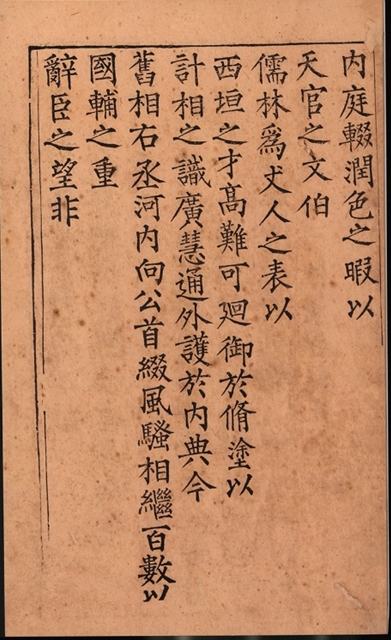
Jumping and Looking Up in Collection of Lotus Society of Zhaoqing Temple in West Lake, Hangzhou
With regard to three situations in the same book, namely, blank spaces and jumping lines, changing lines and not looking up, my understanding is that the province often publishes this episode without seeking uniformity in layout and lines, but deliberately makes formal arrangement adjustments to the text. In other words, he printed it directly according to the preface and the original appearance of the poems about joining the club. Moreover, it is not uniform to raise the head of the word Jing, or to raise the head of this word without other words, or to raise the head of other words without this word, which is also a reflection of the fact that the manuscript has not been adjusted and unified. As for the case of changing the line type to achieve the purpose of looking up, it is not often done intentionally, but according to the original line type, that is, the original seems to look up without line breaks, but actually looks up. In order to cater to the original writing form, it has to be changed. It is very clever and reasonable for the provincial governor to do so, which not only shows his absolute respect for the author’s contributions, but also truly and objectively reflects the attitudes of the people who joined the society at that time towards Buddhism, association and the provincial governor himself, which is what the provincial governor likes to see, which makes the best publicity for his goal of blending Confucianism and Buddhism through association. It is precisely because the province often adopts such a method of editing and engraving that it was inadvertently engraved by the provincial governor (959-1020) before his death, that is, the original engraving of this book was the best proof. If it is later engraved, and the personnel and dynasty have changed, it is impossible to have this kind of "messy" layout again, and its layout will inevitably be adjusted accordingly.
From this, it is thought that version editors usually attach great importance to bank payments, and different bank payments mean different books and different version systems. However, people often don’t pay attention to the phenomenon of different lines and characters in the same book, or think that it is the intention of the engraver, or that it is caused by the patched version, and the reasons for it are lack of understanding from the outside to the inside. This book of the Northern Song Dynasty gives us an inspiration, that is, the inequality of lines and characters can not be ignored in the appraisal version, which is likely to be an important basis for deciding whether to engrave the original or copy it.

關(guān)于作者